
Kuwala Farm Advances: Mobile Chicken Coop and Second Greenhouse Now in Operation.
Land rejuvenation efforts continue to flourish at the Farm, supported by innovative and sustainable farming practices. Goats and chickens actively contribute to natural fertilization as they move through designated grazing areas.
Farm update
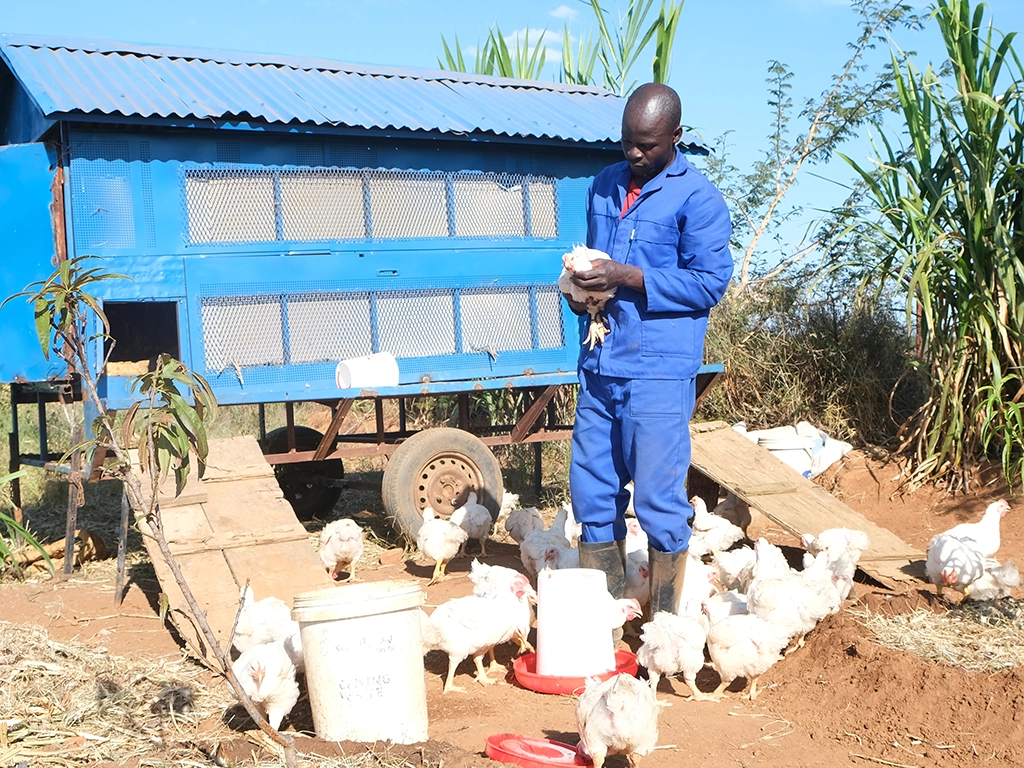
The newly completed mobile chicken coop is now fully operational. The farm team rotates the chickens through scheduled sections of farmland, allowing them to graze and naturally fertilize the soil for future composting and planting. One of the most exciting additions to Kuwala Farm this year has been our mobile chicken coops. While they may look simple, they play an important role in helping us build a healthier and more productive farm.
Unlike traditional coops that stay in one location, mobile coops can be moved throughout the property. As the chickens follow a planned rotation, they naturally fertilize the soil with nutrient-rich manure, improving soil health without relying on synthetic inputs. They also scratch and forage as they move, eating insects and other pests that can damage crops.
The benefits don’t stop there. Access to fresh ground gives the chickens a more natural environment and helps reduce the buildup of parasites and disease that can occur when birds remain in one place for too long. At the same time, the chickens supplement their feed by foraging for seeds, grasses, and insects, helping to lower feeding costs.
What we appreciate most is how well the mobile coops fit into our broader approach to regenerative agriculture. The chickens become active participants in the farm ecosystem, helping recycle nutrients, improve soil quality, and support healthier crop production. It’s a practical solution that benefits both the birds and the land, and we’re already seeing its positive impact across the farm.
Exciting progress is also underway with the greenhouse expansion. The second greenhouse is now complete, and preparations for planting are underway. The farm manager will plant tomatoes, green peppers, and cucumbers in staggered stages to ensure continuous harvests and year-round production.
Canadian Board members toured the Farm, and we were impressed by the growth, the diversity of crops, and the overall organization and care evident throughout the property. The Farm continues to stand as a powerful example of sustainability, stewardship, and hope for the future.