Farm

Harvesting the Rain.

One of the greatest challenges of farming in Malawi is making the most of the heavy rains during the wet season while keeping crops growing through the long, dry months. At Kuwala, we are taking an important step towards addressing this challenge by developing a new rainwater-harvesting system on our school farm.

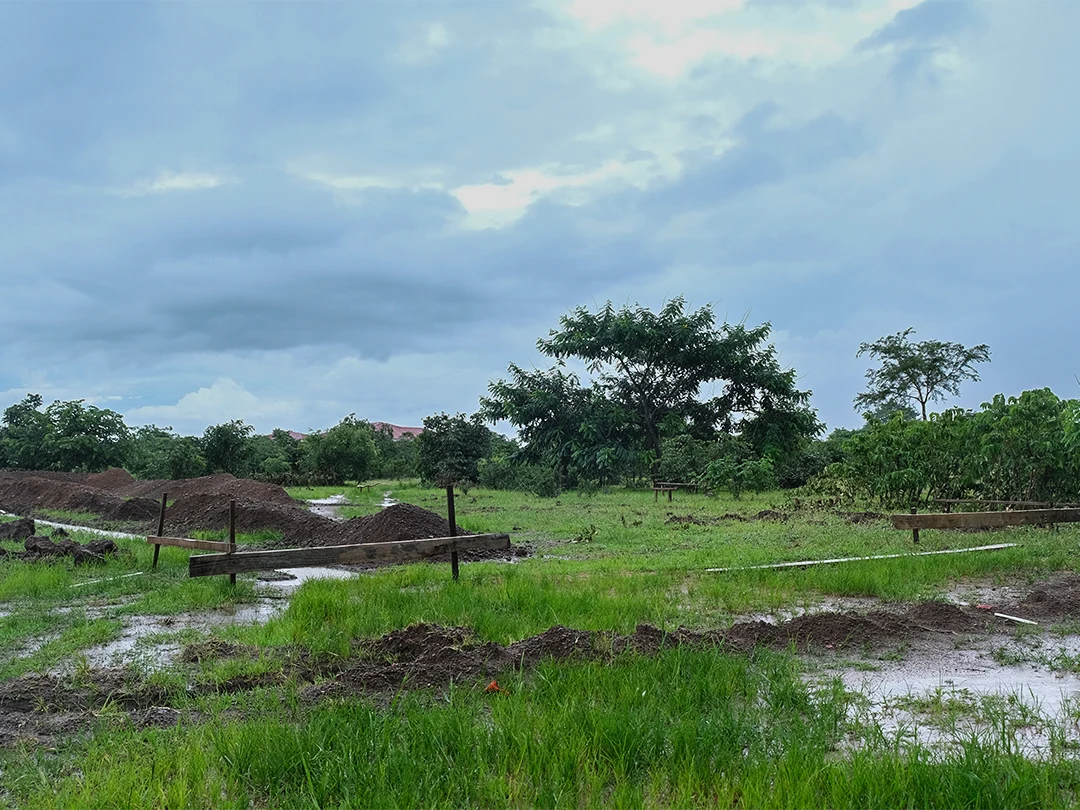
Rainy season in Malawi with flooded fields
During the rainy season fields and roads flood. We can use this to our advantage by collecting the runoff and storing if for the dry season. Kuwala_2026

How Does the System Work?

Instead of allowing valuable rainwater to run off the land and go to waste, we are building a system that collects, filters, and stores it for future use. This project captures and stores rainwater during the rainy season, reducing our reliance on groundwater, and providing reliable water supply for year-round crop production.

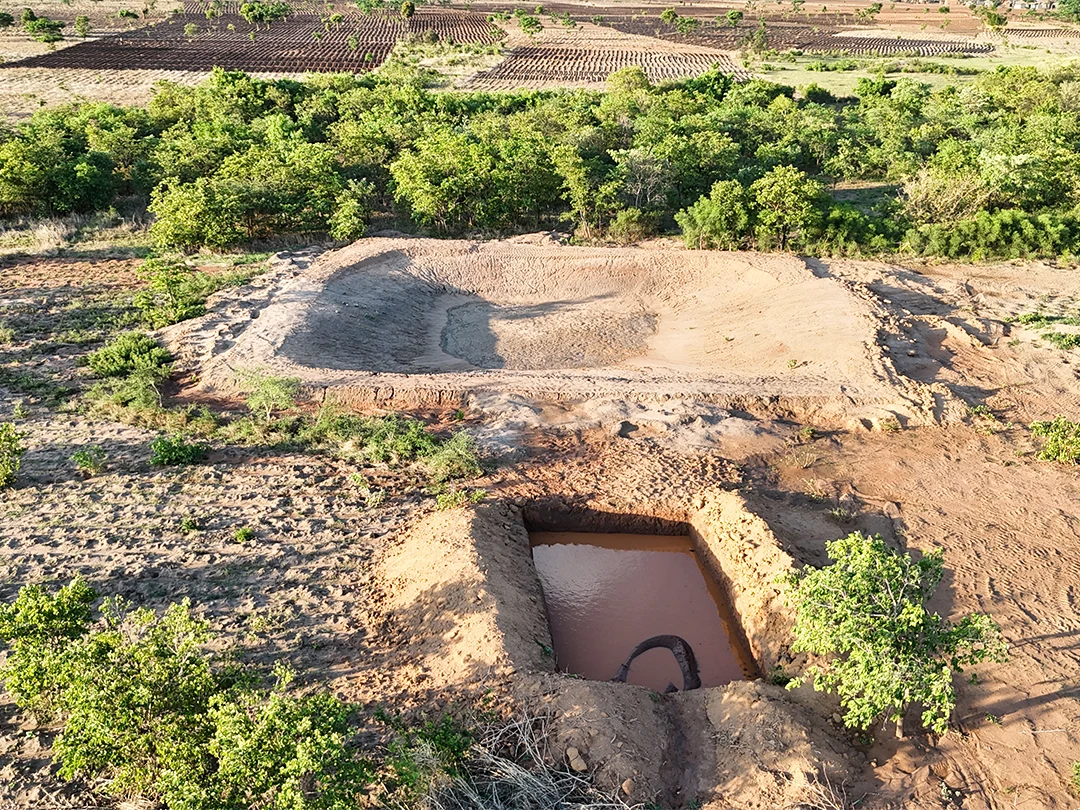
  1. Collecting and filtering rainwater: We have created a channel on higher ground to direct rainwater into a specially dug filtering basin. As the water enters the basin, it slows down, allowing soil, silt, and other debris to settle at the bottom. This first step helps remove unwanted material before the water reaches the main storage area.
  2. Storing the water: After passing through the first basin, the filtered water will flow into a larger dugout, where we will store it for use during the dry season.
  3. Keeping the water in the basin: We have ordered a heavy-duty dam liner from South Africa. Once it arrives, we will install it in the main dugout to prevent water from soaking into the ground and help us retain as much harvested rainwater as possible.
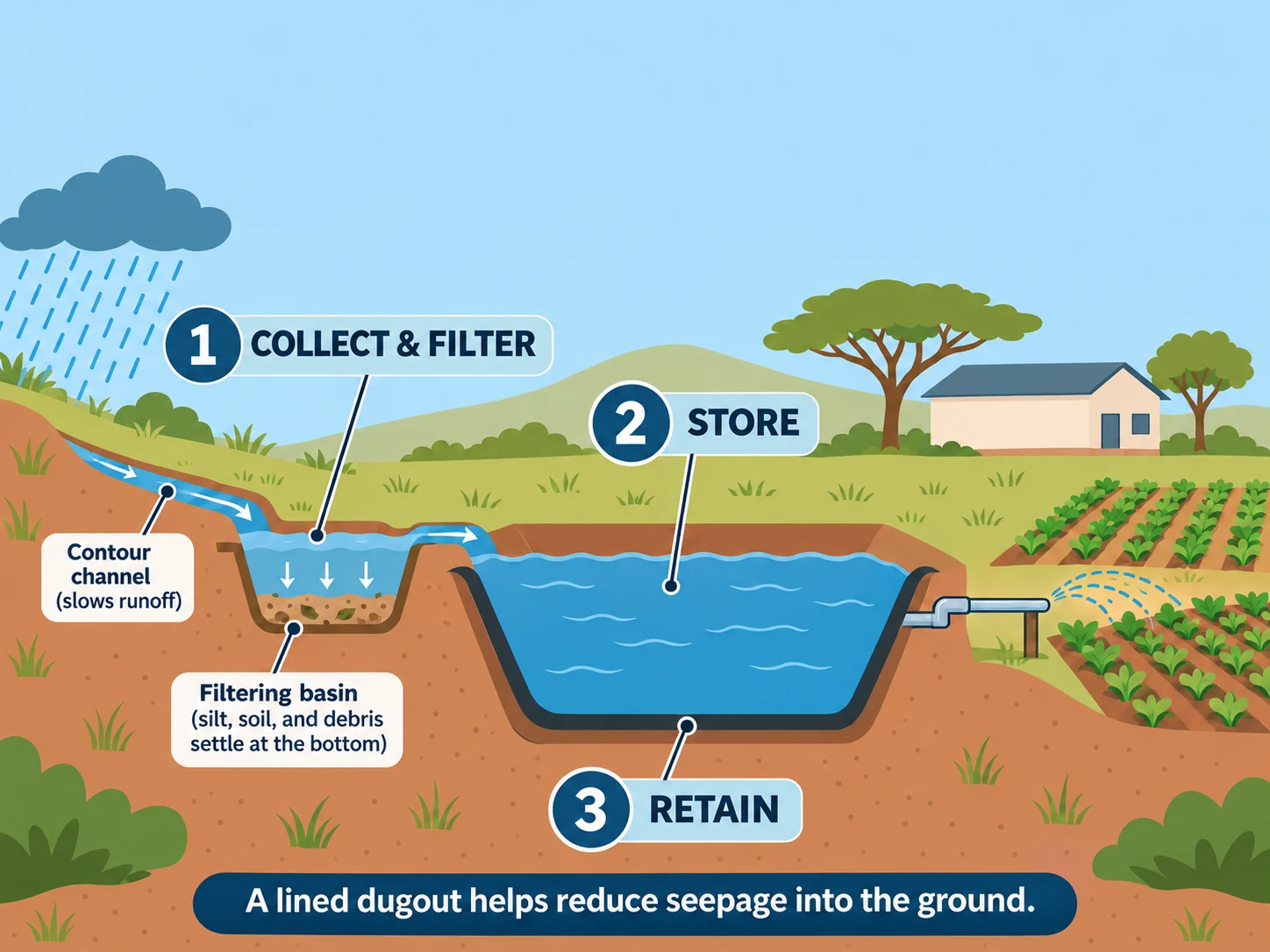
Infographic showing rain clouds and rainwater being collected in a dugout feeding by gravity crops in the field.
Capturing rainwater for the dry season reduces our need to draw water from our wells. Kuwala_2026

Rains put our system to the test

Once the dam liner arrives and we connect the two basins, the completed system will allow us to store a significant supply of rainwater for the months ahead. We plan to use this stored water to irrigate our crops before drawing water from our boreholes, reducing pressure on our groundwater supply and helping protect our wells, especially during the long dry season when water becomes more precious.

But this is only the beginning!

The first dugout serves as a model for a much larger project. Once we complete the system and assess its performance, we hope to build similar rainwater-harvesting facilities at strategic locations across the school farm. Our goal is to create a reliable, sustainable water supply that supports year-round farming, protects our natural resources, and helps Kuwala grow more food for our school community.

View of the farm dugout taken from a drone shot
Expanding our dugout for storing water during the rainy season to feed our crops in the dry season. Kuwala_2026

At Kuwala, we are investing in a more sustainable future, one drop of rainwater at a time!